

What Is the Best Oil of Oregano Supplement: Key Criteria to Check
Five questions to ask before buying any oil of oregano supplement. Answer them correctly and you will not buy a product that does not work.
Most people shopping for oil of oregano supplements use the wrong filter: they compare price per capsule or read the marketing copy on the front label. The front label tells you almost nothing useful. The five criteria that actually determine whether an oregano oil supplement works are buried in the supplement facts panel, the product description, and the company's testing documentation. Here is what to look for.
Criterion 1: Carvacrol Percentage
Carvacrol is the primary active compound in oil of oregano. It is the phenolic molecule responsible for the antimicrobial activity against bacteria, the antifungal effects against Candida, and the gut health benefits from reduction of intestinal dysbiosis. Everything about the therapeutic value of an oregano oil supplement is downstream from the carvacrol concentration.
The minimum carvacrol content in the oil for meaningful therapeutic effect, based on the research literature, is approximately 70%. Below this threshold, antimicrobial effects are measurable in vitro but significantly reduced in their real-world application. Wild-harvested Origanum vulgare from Mediterranean highland regions typically yields 75 to 86% carvacrol in the essential oil.
What to check: find the supplement facts panel or product description and look for a stated carvacrol percentage. If it is not disclosed, ask the company directly or find a product that discloses it. The percentage should be of the oregano oil itself, not of the total capsule content (which includes the carrier oil). A product with 200 mg of oregano oil at 80% carvacrol contains 160 mg of carvacrol per capsule.
Watch for: total phenol claims that lump carvacrol and thymol together without separating them. Thymol is active and synergistic, but it is not a substitute for carvacrol. A product with 80% combined phenols (30% carvacrol, 50% thymol) is not equivalent to one with 80% carvacrol.
A manufacturer using high-quality wild-harvested oil with 80-plus percent carvacrol has every commercial reason to display that number prominently. It is a strong selling point. If a manufacturer does not disclose the carvacrol percentage anywhere on their product page or supplement facts panel, ask yourself why. The answer is usually that they cannot meet a meaningful threshold.
Criterion 2: Wild-Harvested Origanum Vulgare Source
The species and growing conditions of the source plant determine how much carvacrol is achievable in the extracted oil. The medicinal-grade standard is wild-harvested Origanum vulgare from Mediterranean mountain environments, specifically countries like Turkey, Greece, and the Balkans.
Under wild growing conditions (poor soil, high altitude, UV exposure, seasonal drought, natural competition), Origanum vulgare produces high concentrations of defensive phenolic compounds including carvacrol. Under cultivated agricultural conditions (irrigated, fertilized, protected), the same species produces significantly less carvacrol because environmental stress is the trigger for phenolic production.
What to check: the product description or certificate of analysis should state Origanum vulgare specifically (not just oregano) and indicate wild-harvested or wild-crafted origin from a named Mediterranean region. Generic claims like natural oregano or pure oregano without species or origin disclosure should prompt more investigation.
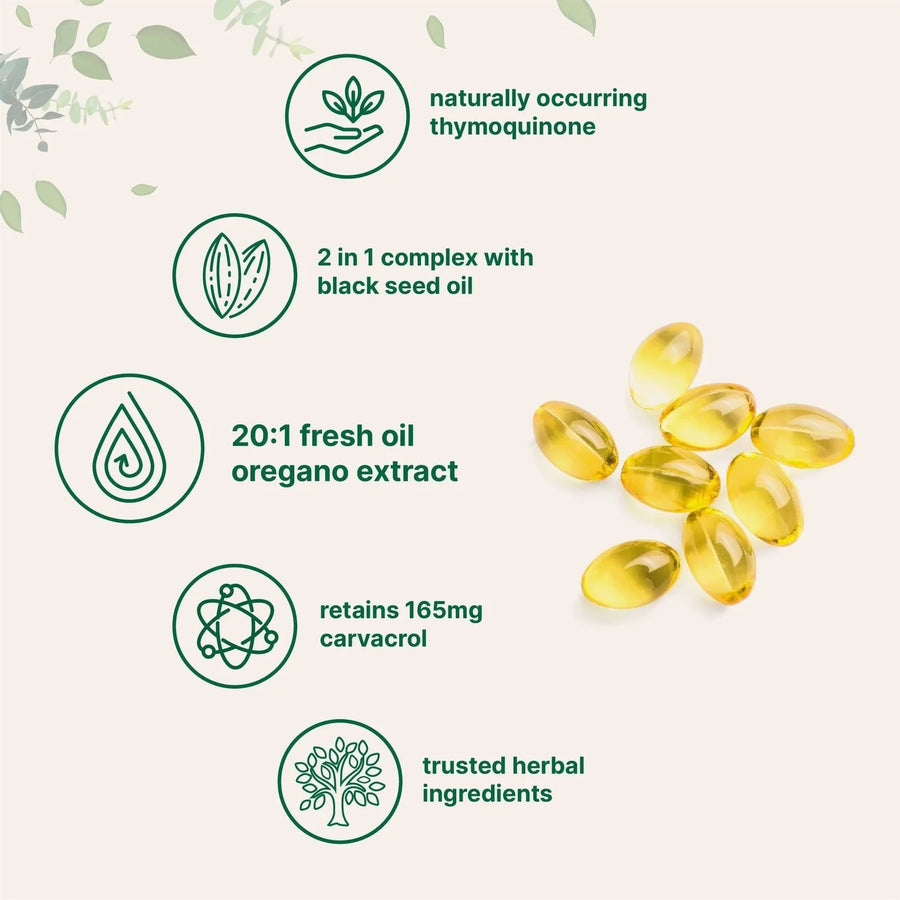
Oil of Oregano Softgels
Wild-harvested Origanum vulgare, high carvacrol, softgel format, olive oil carrier, clean label.
See the ProductCriterion 3: Format and Delivery Method
The format of an oregano oil supplement determines the delivery experience, the anatomical site of release, and the likelihood that you will complete a full therapeutic cycle. For most users, these three factors converge to make softgels the clear format choice.
Softgels seal the oil completely. The capsule passes through the stomach intact and dissolves in the small intestine. This eliminates the burn and aftertaste of liquid drops, delivers carvacrol at higher concentrations to the intestinal environment (relevant for gut health applications), and provides a precisely measured dose without dropper variability.
Hard capsules provide taste-neutral delivery but may not seal as reliably as softgels and often release in the stomach rather than the intestine. Liquid drops deliver the highest initial carvacrol contact rate in the oral mucosa and stomach, but the compliance problems associated with taste and burn make sustained daily use significantly harder for most people.
What to check: confirm the product is a softgel (sealed, one-piece capsule) rather than a two-piece hard capsule or liquid. For gut health applications specifically, intestinal release is the relevant delivery mechanism.
The best delivery system is the one that gets therapeutic concentrations of carvacrol into the right place in your body, every day, for the full length of a cycle. Format is not a minor consideration.
Criterion 4: Purity and Inactive Ingredients
The inactive ingredients in a supplement capsule are often overlooked but can indicate the quality philosophy of the manufacturer. A clean oregano oil softgel contains the oregano oil, a food-grade carrier oil (olive oil), and the capsule shell material (gelatin or a vegetarian equivalent). That is three to four ingredients total.
Common red flags in the inactive ingredient list: titanium dioxide (a synthetic whitening agent with no nutritional function), carrageenan (a potentially inflammatory seaweed derivative used as a thickener in some vegetarian capsule formulations), synthetic capsule coatings derived from petroleum products, and large quantities of magnesium stearate.
The carrier oil also matters. Olive oil is the preferred carrier for oil-based oregano supplements because it is stable, well-absorbed, and has documented compatibility with fat-soluble phenolic compounds. Generic refined vegetable oils are cheaper but may be higher in oxidized fatty acids and lack the minor fatty acids that support absorption.
Find the full ingredient list (not just the active ingredients). Count the components: oil of oregano, carrier oil, capsule shell. If the list has more than five or six items, check each additional ingredient. Anything you cannot identify as a food-grade substance or necessary processing aid warrants a question.
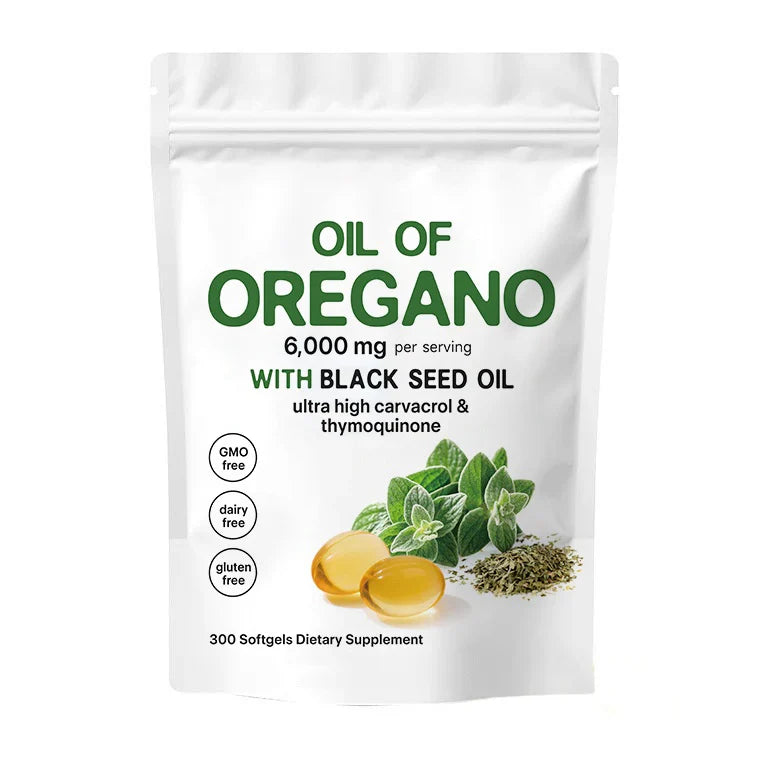
Oil of Oregano Softgels
Wild Origanum vulgare, high carvacrol, softgel delivery, olive oil carrier, clean label. 1,900+ reviews.
See the ProductCriterion 5: Cost Per Therapeutic Dose
Price per bottle is the least useful way to compare oregano oil supplements. It does not account for the number of capsules, the dose per capsule, or the carvacrol concentration per dose. The meaningful metric is cost per milligram of verified carvacrol per serving.
Calculate it as follows: take the stated carvacrol milligrams per capsule (or calculate from oil volume times carvacrol percentage), divide into the price per capsule. This gives you a standardized unit cost that allows honest comparison across products of different sizes, concentrations, and prices.
A product with a higher per-bottle price and higher verified carvacrol may represent significantly better value per therapeutic unit than a cheaper product with lower or unverified carvacrol. The comparison only works when you are comparing verified numbers, which is why carvacrol disclosure (Criterion 1) is the prerequisite for everything else.
Also factor in the money-back guarantee. A 30-day satisfaction guarantee changes the risk calculation. If the product does not perform as expected, you can return it. A product without any guarantee requires higher confidence before purchase.
Applying the Criteria: A Quick Decision Framework
When you are evaluating an oil of oregano supplement, work through these five questions in order. They are arranged from most important to least important, and each criterion you cannot verify reduces your confidence in the product's quality.
First: does it disclose a carvacrol percentage of at least 70%? If yes, continue. If no, ask the company or look for a product that does. Second: does it specify wild-harvested Origanum vulgare from a Mediterranean region? If yes, continue. If no, be skeptical of the carvacrol claim even if one is made.
Third: is it a softgel? If yes, continue. If it is liquid drops, assess your personal tolerance. If it is a hard capsule, confirm the oil is liquid inside rather than a powdered extract. Fourth: is the inactive ingredient list clean? Olive oil carrier, minimal additives? If yes, continue. If the inactive list is long or contains flagged ingredients, weigh that.
Fifth: does the cost per milligram of carvacrol represent fair value? If you can calculate this and it is reasonable, proceed. If the product has passed the first four criteria, the cost question is usually the easiest one to answer.
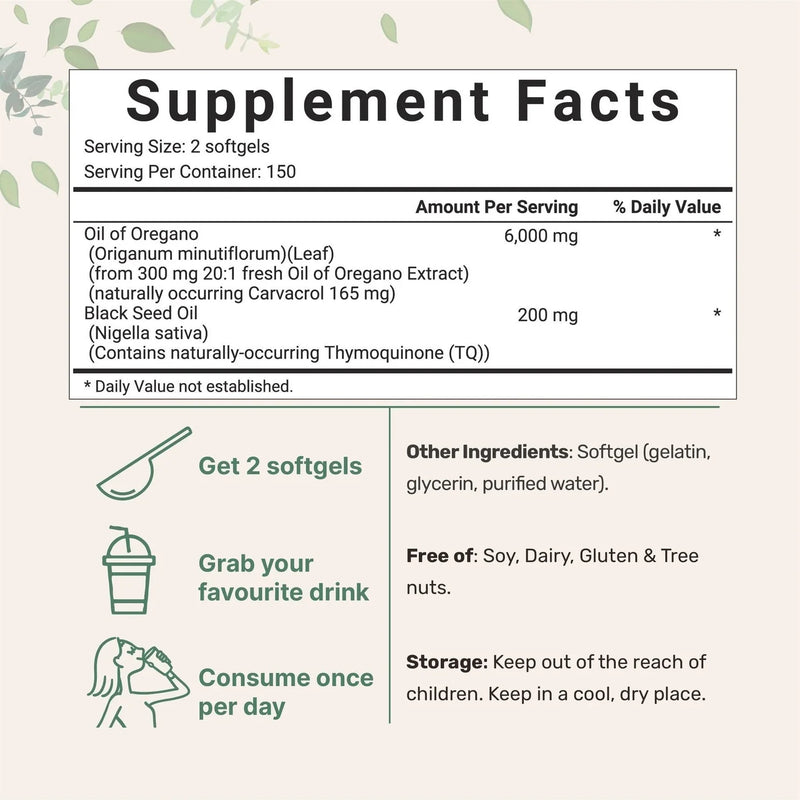
Oil of Oregano Softgels
Wild-harvested, high carvacrol, sealed softgel, clean label, 30-day guarantee. See the details.
See the Product