

How to Remove Tartar From Teeth: What Actually Works at Home
The chemistry of calculus, why rinsing with acids fails, and the one mechanism that genuinely disrupts tartar at home.
Every few months a video circulates claiming a simple household ingredient removes tartar in minutes. Most of these claims are either false or describing something other than calculus removal. Understanding the actual chemistry of tartar clarifies instantly which methods can work and which cannot.
What Tartar Is Made Of
Dental calculus is primarily composed of calcium phosphate minerals in crystalline form. The dominant crystal structures are hydroxyapatite (the same mineral that makes up enamel), brushite (calcium hydrogen phosphate dihydrate), and whitlockite (a magnesium-substituted calcium phosphate). Together, these form a hard, dense mineral matrix within the organic scaffold of the original bacterial plaque.
The mineral content of mature calculus ranges from 70 to 90% inorganic (mineral) material. The remaining 10 to 30% is organic: bacterial cells (mostly dead), proteins from saliva, and cellular debris. This composition explains why calculus cannot be dissolved by rinsing or conventional brushing: it is fundamentally a mineral deposit, not a soft coating.
The bond between calculus and enamel is chemical and mechanical. Chemical bonding occurs between the mineral surface of the calculus and the enamel crystallite surface. Mechanical interlocking happens where the calculus deposit has grown into the microscopic irregularities and pits of the enamel surface. This dual bonding mechanism is what makes calculus so resistant to simple mechanical disruption.
Mature calculus measures 3 to 4 on the Mohs hardness scale, similar to calcite mineral. Enamel measures approximately 5, similar to apatite. This 1-point difference on a logarithmic scale means the deposit is meaningfully softer than the surface it adheres to, which is why correctly applied energy can target the deposit without damaging the enamel beneath.
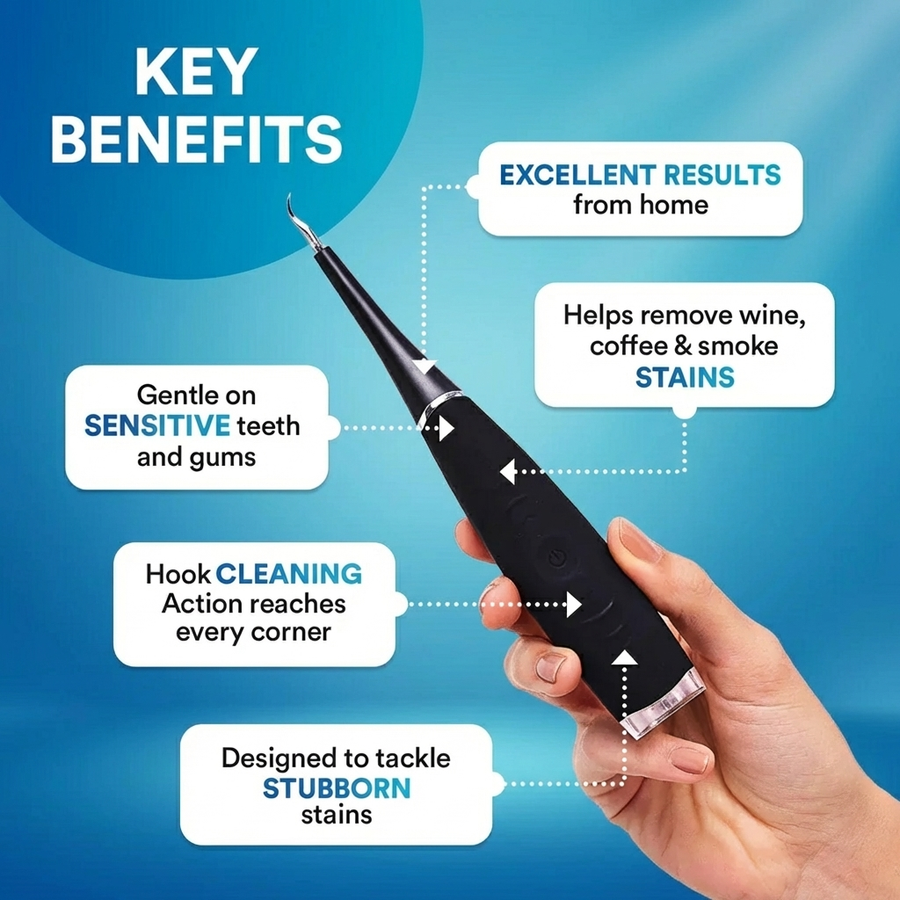
Ultrasonic Tooth Cleaner by Lindalia
Vibrational energy at the right frequency fractures the crystal lattice of calculus at its adhesion point with enamel. The chemistry behind actual tartar removal.
See the ProductWhy Brushing Cannot Remove It
Brushing works by physical abrasion and disruption of the soft, unattached bacterial film (plaque). The force applied by bristle tips against tooth surfaces is sufficient to sweep away the biofilm before it mineralizes. But once calculus has formed, the bond strength between mineral deposit and enamel exceeds what bristles can overcome.
Imagine trying to remove a dried cement spot from a tile with a soft-bristled brush. The brush cleans everything else off the tile perfectly but makes no impression on the hardened spot. This is the mechanical equivalent of what happens when you brush over calculus.
Even electric toothbrushes, which oscillate at high frequency, do not generate sufficient force concentration at the bristle tip to break the mineral bond. The force is distributed over hundreds of bristle contacts simultaneously, which is effective for soft biofilm removal but entirely insufficient for calculus fracture.
The Myths That Circulate
Lemon juice: the citric acid in lemon juice (pH 2.0 to 2.6) can partially dissolve calcium phosphate minerals over extended contact time. But the dissolution effect requires prolonged, direct contact between the acid and the calculus that is not achievable by swishing or brushing. More importantly, the same acid readily demineralizes enamel. The enamel damage from repeated lemon juice application far outweighs any calculus dissolution benefit. This approach is not safe and not effective in practice.
Apple cider vinegar: similar acid profile to lemon juice, same risks, same lack of practical calculus removal effect. No clinical evidence supports ACV for tartar removal. The online testimonials describing "tartar coming off" after rinsing with ACV are describing the removal of soft surface debris and pellicle, not hardened calculus.
Hydrogen peroxide: an oxidizing agent that bleaches chromogens and kills oral bacteria. Does not dissolve or fracture calculus mineral structures. Useful for surface stain reduction and as a mild antibacterial rinse. Not a tartar removal method.
Any method claiming to remove tartar through rinsing, swishing, or topical application of a liquid is making a chemically implausible claim. Dissolving calcium phosphate crystals requires either very low pH conditions (acidic enough to also damage enamel) or sustained mechanical disruption. Liquids that contact the tooth for 30 to 60 seconds during rinsing cannot achieve either.
What Actually Breaks the Bond
Two mechanisms are clinically validated for calculus removal. First: mechanical disruption through controlled force application. This is what professional scaling does with sharp instruments angled precisely to apply lateral force at the calculus-enamel interface. Second: vibrational energy transmission. This is what ultrasonic scaling does, and it is the mechanism accessible at home through consumer ultrasonic devices.
Vibrational energy at the appropriate frequency resonates with the crystal lattice of calculus and creates micro-fractures at the weakest points, which are the adhesion interfaces between the mineral deposit and the enamel surface. The tip does not cut or scrape; it transmits energy that the crystal structure absorbs until the bond fails. At home-grade power levels, this mechanism works on early to moderate supragingival deposits without generating enough energy to affect the underlying enamel.
This is the only at-home mechanism with a sound physical basis for removing calculus rather than simply cleaning around it.
Tartar is a mineral. Removing it requires fracturing a mineral bond. Nothing in your kitchen does that safely.
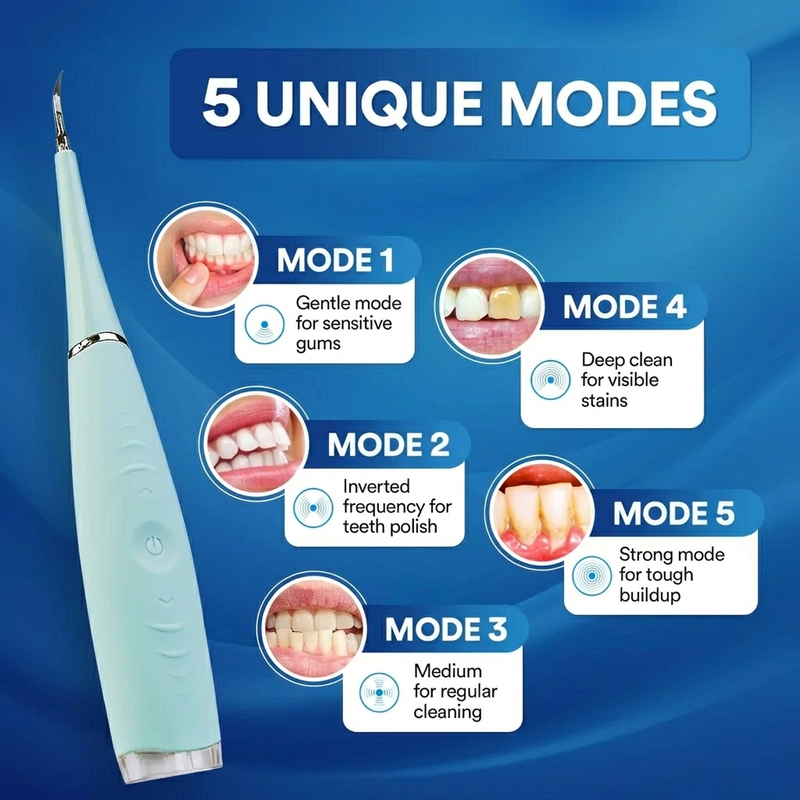
Lindalia Ultrasonic Tooth Cleaner
Vibrational energy, not acid or abrasion. The only at-home mechanism with a valid physical basis for removing mineralized calculus.
See the ProductThe Practical Takeaway
Ignore household acid remedies. They are either ineffective or actively harmful to enamel. Understand that brushing, however good, addresses plaque and not tartar. Appreciate that the one at-home method with a valid physical mechanism for tartar removal is vibrational energy, delivered by a home ultrasonic device.
Anti-tartar toothpastes slow future formation through pyrophosphate chemistry. That is a prevention mechanism and a useful one. But prevention and removal are different functions, and only one mechanism at home addresses removal: ultrasonic vibration applied consistently over weeks.
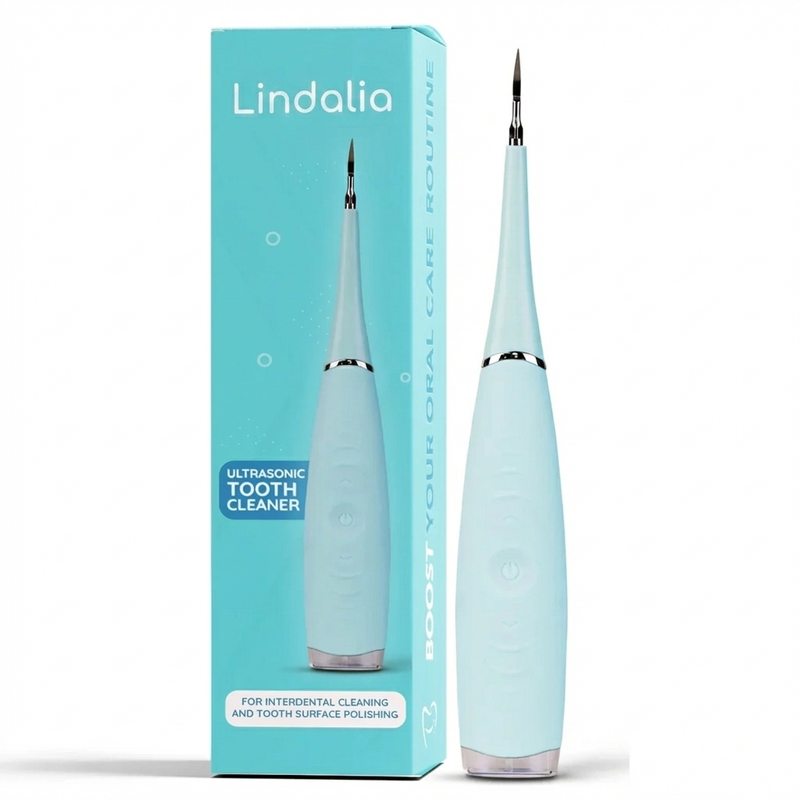
Lindalia Ultrasonic Tooth Cleaner
Vibrational energy that fractures calculus at its bond with enamel. Fine metal tip, LED, USB rechargeable. The chemistry works; so does the device.
See the Product